Crown Thinning in Southgate
If you’re looking for crown thinning in Southgate, you’re likely trying to solve a very practical problem: a tree that is healthy enough to keep, but too dense for the space it sits in. Maybe it’s blocking natural light into the house, catching too much wind, rubbing against nearby branches, or simply becoming too heavy and crowded for comfort. For many Southgate properties, from period family homes with established front gardens to newer developments with tighter outdoor spaces, crown thinning can be the right middle ground between leaving a tree untouched and carrying out a much heavier reduction.
Our approach is always tailored to the tree, the site, and the customer’s aims. That means considering the tree species, its age and condition, the surrounding buildings, access for equipment, local parking restrictions, and whether the tree is in a front garden, back garden, shared driveway, business frontage, or communal landscape. A well-done thinning job should improve light and airflow without making the tree look stripped or unnatural.
In Southgate and the surrounding North London area, trees often sit close to fences, roofs, parked cars, paths, and utility lines. That makes careful planning important. Whether you’re a homeowner, landlord, managing agent, school, office, or commercial property owner, a professional crown thinning service can help keep your trees attractive, safe, and better suited to their surroundings. Contact us today if you want a practical assessment and a clear recommendation for your tree.
What Crown Thinning Means for Southgate Properties
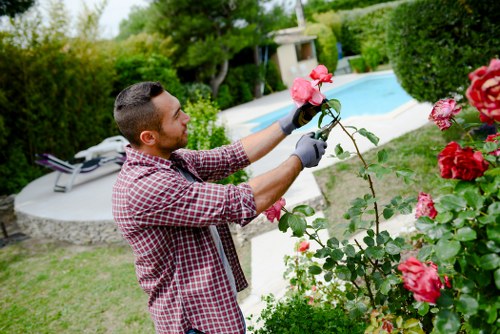
Crown thinning is the selective removal of smaller internal branches across the canopy to reduce density while keeping the overall size and shape largely unchanged. Unlike topping or harsh cutting, thinning is designed to retain the tree’s natural outline. The result is usually a lighter canopy with better airflow, more filtered daylight, and reduced wind resistance. This makes crown thinning especially useful in built-up residential areas where a tree is valuable, but its growth needs subtle management.
For Southgate homeowners, the benefits are often immediate. Rooms facing the garden can feel brighter, patios can become more usable, and lawns or planting beds beneath the tree may receive more light. In commercial or shared spaces, thinning can also make paved areas and seating zones more comfortable. Trees around local shopping parades, small offices, nurseries, and residential blocks often need this type of management because they must work within a limited footprint and remain visually tidy.
It is also a practical choice for older trees that are still in good health but have developed a dense inner canopy over time. Dense trees can trap moisture, limit air movement, and create more friction between branches. By opening up the crown carefully, an arborist can improve the balance of the tree and reduce the chance of heavy movement in strong winds. That can matter a great deal in a neighbourhood like Southgate, where mature trees and close-set properties often share the same space.
Why Local Knowledge Matters in Southgate

Southgate has a mix of property styles, access conditions, and tree types that make local knowledge valuable. Many homes have mature gardens with established trees that have been growing for decades, while others have narrower side access, shared rear entries, or limited front parking. A local team understands how to plan around these conditions and complete the work with minimum disruption.
Parking and access are more than minor details. In parts of Southgate, it may be difficult to position a vehicle or chipper close to the tree, especially on busier residential roads or near commercial premises. This affects how the work is arranged, how equipment is brought in, and how waste is removed. A local arborist can plan these logistics in advance, which helps keep the job efficient and respectful of neighbours.
There’s also the question of tree species. Different species respond differently to thinning, and Southgate’s gardens may include ornamental trees, mature broadleaf specimens, conifers, and mixed species boundaries. A professional tree surgeon will know how much to remove from the canopy, where to thin, and what to avoid so the tree stays healthy and well-shaped. The aim is always to improve the tree, not stress it.
When Crown Thinning Is the Right Choice
Not every tree needs the same solution. Crown thinning is often recommended when the tree is structurally sound but the canopy is too dense for the site. If the crown is restricting light, producing excessive shade, or creating too much wind loading, thinning may be the most suitable option. It can also help where branches are crossing internally, the tree has become awkwardly heavy in certain sections, or the canopy is blocking views and light without needing a major reduction.
Typical reasons Southgate customers ask about this service include:
- Improving light into a garden, conservatory, or ground-floor room
- Reducing wind resistance on a large, leafy tree
- Helping a tree sit more comfortably near a house, fence, or boundary
- Making a canopy less dense without changing the height much
- Managing trees around schools, car parks, or commercial frontage
- Reducing the likelihood of branch rubbing and internal crowding
It is equally important to know when thinning may not be the right option. If a tree is severely overextended, diseased, storm-damaged, or growing in a way that suggests structural weakness, a different type of tree surgery may be more appropriate. A good local contractor will explain the options clearly rather than trying to force one solution onto every tree. That honest approach helps customers make better decisions.
How the Service Works
Most crown thinning jobs begin with a site assessment. This is where the tree’s size, species, condition, and location are reviewed alongside the customer’s goals. The arborist will look at how much light is being blocked, whether there are overextended limbs, what is happening around the base of the tree, and whether there are any constraints such as fences, sheds, paved surfaces, or adjacent properties.
After that, the work is planned so the thinning is even and selective. The goal is not to remove lots of random material. Instead, branches are carefully chosen to open the canopy while keeping the tree’s natural form. This usually involves working across the crown rather than focusing on one side only. A balanced result is much more attractive and better for the tree’s future growth.
Once the work begins, the team will use appropriate climbing, cutting, and lowering techniques depending on access and tree size. Branches are removed in a controlled way, and the site is managed to keep disruption to a minimum. Waste is typically collected and removed at the end of the job. If requested, the area can be left tidy so your garden, frontage, or business premises are ready to use again as quickly as possible.
What a professional team will usually consider
- The percentage of the crown that should be thinned
- How to preserve the natural shape of the tree
- Whether the tree is under stress or recovering from past work
- Branch weight and balance across the canopy
- Access for climbing or equipment
- Protection of lawns, borders, walls, paving, and nearby structures
Benefits of Crown Thinning for Homes and Businesses
The biggest benefit many people notice is improved light. Trees that have become dense over time can cast heavy shade across rooms, gardens, and outdoor seating areas. By opening the canopy slightly, crown thinning lets more daylight through while preserving the tree’s presence and character. For Southgate homes, that can make a real difference to everyday living, especially in front gardens, rear patios, and rooms where daylight is already limited.
Another important benefit is airflow. A dense canopy can hold still air, trap moisture, and create a heavy feel around the tree. Thinning can help improve circulation through the branches, which may support the tree’s overall condition and reduce the amount of wind resistance it faces. This is especially relevant for larger trees in exposed positions or trees growing near buildings where gusts can cause branches to move strongly.
For commercial customers, the value can be just as practical. A tidier, lighter canopy can improve the appearance of an entrance, car park, forecourt, or courtyard, making the property feel more welcoming and better maintained. It can also help prevent leaves and smaller debris from becoming such a constant nuisance in high-use areas. In a busy local setting, that means less frustration and a better experience for visitors, staff, and customers.
Common advantages at a glance
- More natural daylight
- Better air movement through the canopy
- Reduced wind drag on the tree
- A more balanced, refined appearance
- Less crowding between internal branches
- Improved comfort around the tree and nearby buildings
What’s Included in a Crown Thinning Visit
Customers often want to know what they are actually paying for when they book tree work. A proper crown thinning service is more than just cutting a few branches. It should involve a careful, well-managed process that reflects the tree’s needs and the site conditions. From the first conversation through to the final tidy-up, the work should be organised with safety, precision, and customer convenience in mind.
Typical inclusions may involve assessing the tree, discussing the outcome you want, planning access, carrying out the thinning with selective cuts, and removing the resulting branches and debris. On sites with tighter access, there may be extra planning to protect surfaces, work around garden structures, or coordinate with neighbours if the tree overhangs a boundary. The exact service can vary based on the size and complexity of the tree, but the standard of care should stay high.
If the tree is near public areas, shared paths, parking bays, or business entrances, extra attention may be needed to keep people and property safe during the work. The best local teams will explain how they manage this, especially where space is limited. Customers should feel clear about the process before anything starts.
Typical service elements
- Initial site assessment and discussion
- Advice on whether thinning is suitable
- Selective removal of internal branches
- Careful shaping to keep a natural canopy
- Collection and removal of green waste
- Basic site tidy-up after the work
Preparing for Tree Work at Your Property
Good preparation helps the job run smoothly and reduces the chance of disruption. If you’re arranging crown thinning in Southgate, it helps to think about access first. Can a vehicle get close to the tree? Is there a side entrance to the garden? Are there bins, bikes, patio furniture, or fragile items that should be moved beforehand? Small steps like these make the work easier and quicker.
For homes with pets or young children, it is sensible to plan for a safe area away from the work zone. Tree surgery involves tools, falling material, and movement around the site, so the immediate area should be kept clear while the job is underway. If the tree is shared with a neighbour or overhangs a boundary, it can also be useful to let them know work is taking place, especially where branches or access may affect both sides.
Commercial clients may wish to schedule the work at a quieter time so the site remains accessible to staff and visitors. Schools, care settings, retail premises, and offices often prefer work to happen with minimal interruption. A local team can usually help plan around these practical needs. That flexibility matters when the property needs to stay open and functional.
Preparation checklist
- Move vehicles if access is needed close to the tree
- Clear garden furniture, ornaments, and fragile items
- Keep pets indoors or away from the work area
- Ensure gates can be opened easily
- Check whether neighbours should be informed
- Make a note of any concerns about roots, branches, or nearby structures
Pricing Factors for Crown Thinning in Southgate
People often ask what affects the cost of crown thinning. It’s understandable to want a clear idea before booking, especially when comparing different tree services. While exact prices depend on the site, several key factors usually shape the quote. A tree that is modest in size and easy to access will generally be simpler to work on than one that is large, mature, overhanging structures, or located in a tight rear garden with restricted entry.
Tree size is one of the biggest factors. The larger the canopy, the more time, skill, and equipment may be required. Access matters too. If branches must be lowered carefully over fences or through narrow gaps, the job becomes more involved. The amount of material to be removed, whether waste can be loaded directly, and whether traffic or parking control is needed can also influence the overall cost.
Condition plays a role as well. A healthy tree that simply needs selective thinning is different from a tree with deadwood, weak unions, previous poor pruning, or awkward growth patterns. In those cases, the work may take longer because the arborist has to proceed with extra care. A clear site visit or detailed discussion usually helps produce the most accurate quote.
Factors commonly considered in a quote
- Tree height, spread, and density
- Access for people, tools, and waste removal
- Location near buildings, fences, roads, or cables
- Whether additional pruning or deadwood removal is needed
- Amount of green waste generated
- Time needed to complete the job safely
Why Choose a Local Company for Crown Thinning
Choosing a local company means choosing a team that understands the area, the property types, and the practical obstacles that come with tree work in North London. In Southgate, many jobs involve careful work near homes, garden boundaries, shared access routes, and busy roads. A local arborist is more likely to be familiar with those conditions and the best way to manage them efficiently.
There is also value in local responsiveness. If you need advice about a tree in the front garden, a boundary tree affecting a neighbour, or a canopy that has become too heavy after a period of rapid growth, a nearby team can often arrange a visit more easily. That can be especially helpful for landlords, block managers, and business owners who need practical answers and a dependable timeline.
A local company is also more likely to appreciate the look and feel of the neighbourhood. Southgate has a mix of mature residential streets, transport corridors, green spaces, and commercial areas, and tree care needs to fit into that context. The best work is not just technically correct; it also respects the setting and leaves the tree looking balanced and natural. That combination of care and local understanding is what customers usually want.
Areas Covered Around Southgate
Customers looking for crown thinning in Southgate often live or work in nearby parts of North London as well. A local service is useful because trees and property layouts tend to share similar characteristics across the wider area: mature gardens, boundary trees, limited parking, and a strong need for neat, controlled tree management. Whether the tree is at a private home, rented property, or business site, local coverage makes organising the work much simpler.
Areas commonly served may include Southgate itself along with surrounding neighbourhoods such as Oakwood, Palmers Green, Winchmore Hill, Bounds Green, Arnos Grove, and parts of Enfield and nearby North London districts. The exact site matters more than the postcode, of course, but these are the kinds of places where crown thinning is often requested because established trees and close-built surroundings go hand in hand.
If your property sits near local roads, residential terraces, communal gardens, or mixed-use premises, it can be useful to choose a tree team that already understands how to work in those environments. That can make scheduling, access, and waste removal much more straightforward.
Property types we commonly help with
- Detached and semi-detached homes
- Terraced houses with rear access
- Front-garden and boundary trees
- Flats and shared gardens
- Schools and nurseries
- Offices, forecourts, and retail premises
- Rental properties and managed estates
FAQs About Crown Thinning in Southgate
Will crown thinning damage my tree?
When carried out correctly, crown thinning should not damage a healthy tree. The work is selective and measured, with the aim of improving light penetration and airflow while keeping the tree’s structure intact. Problems usually arise when too much is removed or the cuts are made in the wrong places, which is why proper arboricultural judgement matters.
How much of the canopy should be removed?
That depends on the tree, its health, its species, and what you want to achieve. There is no single answer that suits every tree. A professional will assess how dense the crown is and suggest a sensible level of thinning that keeps the tree looking natural. The objective is usually a modest reduction in density, not a dramatic loss of foliage.
Is crown thinning better than crown reduction?
They are different services. Crown thinning reduces the density of the crown, while crown reduction reduces the overall size by shortening branches. If the tree is too wide or too tall for its setting, reduction may be more suitable. If the tree is the right size but too dense, thinning is often the better option. The choice depends on what problem you’re trying to solve.
Can thinning help with wind on a large tree?
Yes, it can help by reducing the resistance the canopy presents to the wind. That said, the work must be balanced and done carefully. The goal is to reduce excessive drag without making the tree unstable or encouraging poor regrowth. A sensible thinning approach can make a tree more comfortable in its surroundings.
Do I need permission before the work starts?
Sometimes you may. If the tree is protected by a Tree Preservation Order or sits in a conservation area, there may be rules about what can be done. A local tree professional can help you understand whether checks are needed before work begins. It is always better to confirm the situation in advance rather than assume the tree is unrestricted.
How often should a tree be thinned?
That varies by species, growth rate, and site conditions. Some trees may only need attention occasionally, while others in fast-growing or tight urban settings may require more regular review. A good maintenance plan is based on the tree’s condition rather than a fixed timetable. Regular assessment is often the best way to prevent bigger issues later.
What to Expect from a Professional Finish
A good crown thinning job should leave the tree looking like itself, only lighter and more balanced. The canopy should not appear patchy or overworked. Instead, you should see more daylight filtering through, with the tree still providing structure, shade, and visual value. For many customers, this is the real advantage of thinning: it improves the day-to-day feel of the space without making the tree look overly altered.
Once the work is complete, the site should be cleared of the main debris and left tidy. If the tree sheds a lot of leaf and twig material, some fine debris may still remain, but the main branches and cuttings should be removed. The surrounding garden or business area should feel ready to use again. If you were worried about the tree hanging too heavily over your property, the finished result should bring a noticeable sense of relief.
For anyone weighing up whether to go ahead, a site visit or quote discussion is the best place to start. You can talk through your concerns, explain what the tree is doing, and ask what outcome is realistic. Request a free quote and get clear advice on whether crown thinning is the right choice for your Southgate property.
Before you book, it helps to ask
- What outcome should I expect from thinning this tree?
- Will the canopy still look natural afterwards?
- Is the tree suitable for thinning at this time of year?
- How will access and waste removal be handled?
- Are there any permission checks I should know about?
Book Crown Thinning in Southgate
If your tree is healthy but too dense, if your garden has become darker than you’d like, or if you want a cleaner, lighter canopy without losing the character of the tree, crown thinning may be the ideal solution. It is a practical, discreet form of tree care that suits many Southgate properties, from private gardens and shared spaces to commercial frontages and managed sites.
The best results come from thoughtful planning, careful cuts, and a proper understanding of how the tree sits within its environment. That is especially important in a built-up local area where access, parking, neighbour considerations, and nearby structures all play a part. A good local team will take those details seriously and tailor the work accordingly.
Book your service now if you’re ready to improve light, airflow, and the overall appearance of your tree. Whether you need a one-off visit or want advice on ongoing tree management, a professional crown thinning service in Southgate can help you make a confident, informed decision.
Contact us today to discuss your tree and arrange a visit when it suits you.